

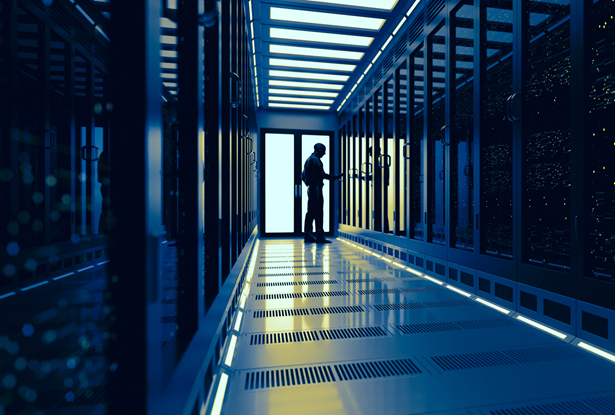
How to Prevent Unplanned Data Center Outages with Battery Backup and Energy Storage
Building resilience to reduce the high costs of data center downtime
The high cost of unplanned outages in data centers
Unplanned data center outages can severely impact business operations, customer trust, and revenue. According to a 2023 Pingdom article,* the average cost of an unplanned outage ranges from $5,600 to $9,000 per minute—a figure that is expected to rise year over year.
Understanding how to prevent unplanned data center outages is a critical priority for IT and operations leaders.
The role of data center battery backup
A reliable data center battery backup system is essential for bridging power gaps during outages. These systems ensure continuity until generators turn on, reducing the risk of service disruption.
Emerging UPS technologies, including lithium-ion and modular designs, offer scalable, energy-efficient solutions that are aimed at supporting uptime while lead acid options like advanced pure lead batteries also provide that support but with a bigger focus on sustainability.
Expanding resilience with BBU and BESS
While traditional BBUs (Battery Backup Units) are common in telecom and edge environments, large-scale facilities increasingly leverage Battery Energy Storage Systems (BESS) for extended runtime and grid interaction.
C&D batteries can serve as the backbone of a BESS, enabling data centers to store energy, participate in demand response programs, and provide critical backup during grid instability. This approach not only enhances reliability but also supports sustainability goals by integrating renewable energy sources.
Infrastructure redundancy and monitoring
Preventing outages requires layered protection. Redundant power and cooling systems (e.g., N+1 configurations), predictive maintenance, and environmental monitoring (temperature, humidity, airflow) help detect and resolve issues before they escalate.
Cybersecurity and disaster recovery
Cyber threats are a growing cause of outages. Implementing zero-trust architecture, intrusion detection, and regular disaster recovery testing ensures resilience against both internal and external risks.
Sustainability and reliability
Energy-efficient cooling and renewable power or green energy integration not only reduce operational costs but also enhance system reliability.
With outage costs climbing year over year, investing in advanced battery backup and BESS solutions is no longer optional—it’s a strategic imperative for uptime and business continuity.
When paired with a dependable data center battery backup, these strategies strengthen overall uptime.
Conclusion: Investing in resilience
Knowing how to prevent unplanned data center outages means investing in smart infrastructure, proactive monitoring, and strategic planning.
For data center managers, these efforts are essential to maintaining business continuity and competitive advantage.
*Solar Winds Pingdom. Average Cost of Downtime per Industry. Article, 2023.