

Innovating for the Future: Sustainable Standby Power Solutions for Telecom
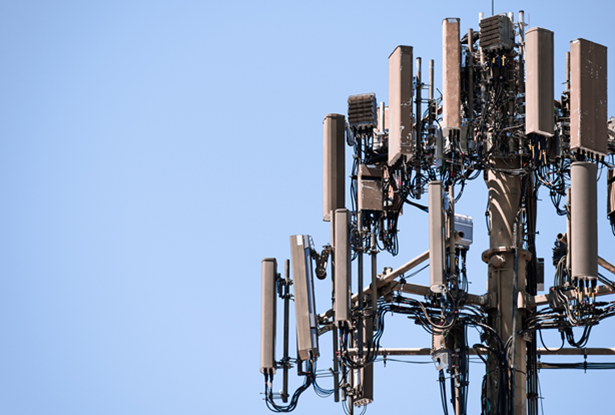
A Thought Leadership White Paper for Sustainable Telecom, Edge, and Data Center Power Architectures
Join us for part 5 on C&D's series on 5G technology.
Executive Narrative: Why Power Innovation Matters Now
Digital infrastructure is entering a transformative era. Telecom networks and data centers—long built around predictable loads and centralized architectures—now face exponential complexity driven by 5G deployment, distributed AI adoption, edge computing, and a world that expects continuous, low-latency digital experiences. Across all of this, one constant remains: power determines performance.
AI is no longer "just data centers." It is an end-to-end infrastructure system. Fiber transport, mobile access, metro aggregation, and edge compute all matter because AI workloads move fluidly across devices, users, sensors, edge locations, and large cloud clusters. As AI becomes integrated into daily workflows, traffic patterns shift: more uplink-heavy, more interactive, and far more sensitive to latency, jitter, and availability.
Inference (Inference refers to the stage of AI where a trained model is used to make real-time predictions or decisions on live data.) will increasingly be placed, not just run. Teams will determine where inference occurs—cloud, metro edge, on-prem, or near the access layer—based on latency, cost, sovereignty, and energy considerations.
This drives more compute and storage outward into thousands of distributed sites. As a result, power resilience, lifecycle sustainability, and backup architecture now sit at the center of commercial and engineering strategy.
Operators face three converging imperatives:
Innovate the power architecture. Hybrid systems, intelligent controls, and active energy storage are now structural enablers of AI-era uptime.
Build sustainably across the full lifecycle. Long service life, recyclability, reduced waste, and fewer interventions are essential to ESG commitments and operational stability.
Strengthen resilience to eliminate downtime. Distributed AI, enterprise SLAs, and latency-sensitive services cannot tolerate instability at any layer.
The Sustainability-Driven Shift in Power Architecture
Sustainability has shifted from an external reporting exercise to a core engineering constraint. Power systems shape:
Scope 1 emissions via generator runtime and fuel
Scope 2 emissions via energy efficiency and cooling requirements
Scope 3 emissions via material use, replacements, transport, and end-of-life handling
Longer service life reduces replacements and waste. Circularity through mature recycling streams reduces demand for virgin materials. Lower losses reduce cooling loads and energy draw. Fewer maintenance interventions reduce transport emissions and operational risk.
Sustainable power solutions are not only greener—they increase predictability, improve reliability, and reduce total lifecycle cost.
Innovation in Energy Systems: The New Sustainable Power Stack
Next-generation networks require next-generation power design. Hybrid systems now combine grid input, renewable generation, high-efficiency generators, and storage solutions that actively cycle.
In these environments, batteries are no longer “standby devices”; they are integral system participants.
Modern storage must:
Charge and discharge efficiently
Tolerate variable input sources
Smooth dynamic compute and radio loads
Provide stable ride-through for grid events
Minimize generator runtime
AI-enabled power controllers forecast load, optimize charging windows, manage thermal envelopes, and identify early degradation patterns. These systems perform best when paired with storage chemistries that age predictably and behave consistently.
Innovation, sustainability, and resilience reinforce one another: systems that run cooler, last longer, require fewer interventions, and maintain stable behavior reduce both carbon impact and operational risk.
Battery Technology for a Sustainable Future
Energy storage is central to power sustainability and operational stability. Three chemistries dominate modern hybrid and standby power for telecom environments: pure lead VRLA batteries, carbon-enhanced VRLA batteries, and lithium-ion batteries.
Chemistry Overview (Simple Comparison)
| Chemistry | Where it's strongest | Key strengths | Key things to watch |
|---|---|---|---|
| Pure Lead VRLA | Standby strings in telecom & data centers | Very predictable life, strong thermal behavior, high recyclability, low maintenance | Not designed for heavy daily cycling or deep PSoC operation |
| Carbon-enhanced VRLA | Hybrid / renewable-assisted and grid-unstable sites | Better cycling and PSoC tolerance than pure lead, supports reduced generator runtime, uses existing VRLA recycling streams | Still VRLA-based: needs appropriate charging and remains bulkier than lithium-ion |
| Lithium-ion | Deep cycling, high-power or space-/weight-constrained applications | Very high cycle life, high efficiency, high energy density and lower weight enabling a smaller footprint | Requires strict BMS and thermal management; recycling and end-of-life handling must be planned carefully |
A sustainable power strategy uses each chemistry where it fits best—pure lead for long-life standby, carbon-enhanced VRLA where hybrid operation and cycling are present, and lithium-ion where deep cycling, density or weight constraints justify the added management and complexity.
[T]he most sustainable and resilient power systems are those requiring the fewest interventions. Every site visit introduces cost, emissions, risk, and potential service disruption."
Innovating for the Future: Sustainable Power for TelecomOperational Realities: Uptime Depends on Storage
Telecom and edge sites operate in challenging environments: remote towers, dense urban enclosures, thermally stressed cabinets, and rooms with constrained maintenance access. These sites increasingly support AI inference, low-latency compute, and enterprise SLAs.
Across these contexts, the most sustainable and resilient power systems are those requiring the fewest interventions. Every site visit introduces cost, emissions, risk, and potential service disruption.
Pure lead VRLA supports stable, reliable standby power for telecom with minimal touch-time.
Carbon-enhanced VRLA supports hybrid sites that cycle frequently and face irregular recharge conditions.
Lithium-ion supports high-density or deep-cycling sites with appropriate safety and monitoring systems.
By selecting chemistries aligned to operational realities, operators reduce both fragility and environmental impact.
Operational Sustainability: Reducing Interventions and Avoiding Downtime
Operational sustainability means reducing the frequency, complexity, and risk of field interventions.
Every avoided truck roll lowers emissions. Every avoided replacement reduces material use. Every avoided outage prevents emergency maintenance with high environmental and operational cost.
Downtime as a Business, Operational, and Sustainability Risk
Outages disrupt AI workflows, enterprise systems, and critical services—and often trigger unsustainable emergency actions such as expedited shipping, emergency travel, or rapid replacement cycles. The environmental cost compounds with the operational one.
Many failures originate from human factors—terminations, torque errors, contamination, or handling mistakes. Reducing the number of times a system is opened or adjusted directly improves reliability and sustainability.
Pure lead VRLA minimizes intervention frequency in standby environments.
Carbon-enhanced VRLA improves cycling stability in hybrid environments.
Lithium-ion reduces cycling-related aging where deep cycling is required but must be managed within a safety- and sustainability-focused framework.
AI & Edge: Why Distributed Resilience Defines the Next Decade
AI reshapes not only compute architectures but the power strategies supporting them. As workloads distribute across RAN, transport, metro nodes, enterprise sites, and cloud regions, localized resilience becomes strategic.
Distributed AI environments experience:
Higher power density
More volatile load patterns
Greater sensitivity to outages
Increased reliance on immediate backup during inference tasks
Pure lead VRLA provides predictable standby performance for distributed sites requiring high reliability with low maintenance.
Carbon-enhanced VRLA supports hybrid or renewable-assisted edge sites with more cycling.
Lithium-ion supports high-intensity compute environments requiring deep cycling or high-power bursts.
Sustainable power design ensures that distributed AI architectures are supported by predictable, low-impact, low-risk energy systems at every layer.
Compounding Sustainability Value: Small Wins, Big Impact
Sustainability and long-term value are achieved through the accumulation of small, repeatable efficiencies over time.
For power systems, those efficiencies include:
Fewer replacements and therefore fewer material cycles
Lower standing losses and reduced heat generation
Lower cooling demand in shelters and rooms
Fewer maintenance trips and lower travel emissions
Reduced waste and simpler end-of-life handling
Fewer opportunities for human error during interventions
Pure lead VRLA contributes through long, stable standby operation and mature recyclability.
Carbon-enhanced VRLA contributes by reducing generator usage and supporting hybrid cycling.
Lithium-ion contributes through efficiency and cycle performance when deployed with responsible end-of-life planning.
Across a large fleet, sustainable engineering in power systems leads to:
A smaller environmental footprint
More predictable OpEx
Fewer emergency interventions
A more stable and resilient network over time.
Lower losses, fewer swaps, less touch-time, and lower risk add up quickly—sustainability and reliability compound together.
C&D Technologies: Advancing Sustainable Standby Power for Telecom for the Next Decade
As networks become more distributed, intelligent, and sustainability-driven, power systems must deliver predictable performance with minimal interventions.
C&D Technologies supports this evolution by providing storage solutions engineered for the real demands of telecom, edge, and data-center environments—where reliability and lifecycle sustainability are inseparable.
Leadership in Pure Lead VRLA for Standby Criticality
C&D’s pure lead AGM VRLA technology forms the backbone of thousands of critical infrastructure sites worldwide. It is purpose-built for long-life standby performance, offering:
Predictable, gradual aging that simplifies long-term asset planning
Exceptional thermal resilience, enabling stability across challenging geographies
Long service life in float conditions, reducing replacement cycles and material impact
High recyclability through closed-loop systems, reinforcing circular-economy goals
Minimal maintenance requirements, supporting operational sustainability and reducing technician exposure
These characteristics make pure lead VRLA one of the most sustainable and operationally reliable standby chemistries available today—especially in telecom and data-center environments where uptime is non-negotiable.
Supporting Hybrid and Distributed Architectures
Where operators introduce hybrid power, renewable integration, or increased cycling due to grid instability, C&D complements its pure lead portfolio with carbon-enhanced VRLA solutions engineered to support moderate cycling and improved recharge acceptance while retaining the recycling and safety advantages of VRLA battery technology.
This chemistry-appropriate approach ensures operators deploy the right solution for the right application—not an over- or under-engineered system.
Guiding the Industry Toward Lifecycle-Optimized Energy Strategies
C&D contributes more than hardware. We help operators adopt power strategies that measurably improve lifecycle sustainability:
Reducing generator runtime and fuel use
Extending replacement intervals
Enhancing thermal performance to lower energy waste
Increasing predictability across diverse operating environments
Providing engineering expertise for network-wide resilience planning
By aligning technology choices with both operational and environmental objectives, C&D enables operators to modernize their networks without compromising sustainability principles.
A Power Partner for the AI and Edge Era
As AI workloads push critical infrastructure outward—from centralized sites to thousands of edge locations—pure lead VRLA becomes even more essential. Its combination of reliability, recyclability, and low-touch behavior directly supports the operational sustainability that distributed AI architectures require.
C&D continues to innovate around these principles, ensuring that operators have power solutions that are:
Sustainable over decades, not just at installation
Resilient under real-world conditions, not idealized models
Optimized for standby reliability, where most network availability challenges occur
Aligned with circular-economy expectations, not disposal-centric lifecycles
Our mission is simple: enable a future where digital infrastructure grows without increasing environmental burden—and where sustainability and reliability reinforce, rather than oppose, each other.
Conclusion: The Future of Power Is Sustainable by Design
Digital infrastructure is becoming more distributed, more intelligent, and more critical to society. Power can no longer be treated as a static background utility. It is a strategic layer that determines whether networks can scale sustainably while meeting expectations for uptime, performance, and environmental responsibility.
Future-ready infrastructures will be defined by power systems that:
Reduce downtime and operational risk
Reduce waste and material intensity
Reduce unnecessary interventions and technician exposure
Reduce thermal and energy inefficiencies
Support distributed AI and edge compute reliably
Improve lifecycle sustainability and circularity
Pure lead VRLA batteries, carbon-enhanced VRLA, and lithium-ion each have distinct roles to play in this transition. When deployed thoughtfully—aligned to application, environment, and lifecycle goals—they create a power ecosystem that is robust, efficient, and sustainable.
Vendors and operators who prioritize long-term performance, recyclability, and predictable behavior will be best positioned to navigate the next decade. By treating sustainability as a design principle rather than a constraint, the industry can deliver networks that are not only more capable, but also more responsible.
Sustainable power is no longer an aspiration. It is an operational necessity—and a differentiator. Those who invest in sustainable standby and hybrid power strategies today will define the standard for telecom, edge, and data-center performance tomorrow.
About the author
Magnus Bjelkefelt is the Regional Sales Manager for Europe at C&D Technologies, bringing with him over 20 years of experience in the telecommunications, power electronics, and energy storage industries.
Articles by Magnus Bjelkefelt
Welcome to the Future: An Introduction to 5G and its Transformative Potential
Innovating for the Future: Sustainable Standby Power Solutions for Telecom
As a Subject Matter Expert in 5G networks, Magnus has developed a deep understanding of the complexities of powering and backing up advanced communication networks.