

Debunking 4 Common Myths About Lead Acid Batteries
By Erick Soares, Director of Product Management for Stationary Applications at C&D Technologies
Selecting the proper battery technology has never been more important for service providers in the telecom industry and owners of data centers, especially colocation facilities. The continued rise of artificial intelligence (AI) and edge computing and their associated power needs has placed batteries, especially those used for UPS systems, under the microscope.
That close-up evaluation has led to the realization that we need to re-think common perceptions of certain technologies. In fact, there are some common myths that must be debunked so that the proper power choice is made for the application in which it will be used.
Here are four important misconceptions about lead acid batteries to help separate fact from fiction.
Myth #1: Thin Plate Pure Lead is the Only True Pure Lead Battery
Thin Plate Pure Lead or TPPL batteries have been widely used for decades. This has led many to believe it is the only true pure lead alternative. That is simply incorrect. The reality is that there is no industry standard for designing a pure lead battery. In fact, there is not even agreement on what defines one.
So, the next time you hear “pure lead battery,” pause and focus on your application, not the sales pitch. Then, contact multiple manufacturers and ask them how their respective products can best meet your specific needs.
Chances are, a company with over 120 years of experience, such as C&D Technologies, can provide the solution that satisfies your requirements. A perfect example is our Pure Lead AGM battery family.
Myth #2: Only Pure Lead Grids Help Increase Battery Life
There are two key components to a high-performing battery—the grid and the paste. The grid will corrode over time while the paste will eventually dry out. Batteries primarily reach end-of-life due to these two factors. If the goal is to build the best power solution, emphasis has to be placed on how to improve the grid and the paste. C&D Technologies has developed advanced technologies to do just that.
Terminals are a consideration, as well. They may not impact life, but they certainly affect maintenance. Top terminal batteries are easily interchangeable but can be harder to maintain.
On the other hand, front terminal batteries, such as C&D True Front Access™ products, often have more power, are easier to install, and safer to maintain. Simplifying maintenance and installation ultimately helps batteries last longer.
Like many things in life, however, there are a variety of designs. Decision-makers should select a battery that doesn’t require additional brackets to have the terminals in the front and with all the connections done internally.
There are two key components to a high-performing battery—the grid and the paste. The grid will corrode over time while the paste will eventually dry out. Batteries primarily reach end-of-life due to these two factors. If the goal is to build the best power solution, emphasis has to be placed on how to improve the grid and the paste."
Debunking Common Myths About Lead Acid BatteriesMyth #3: Certifications Increase Power Per Square Footage
Some manufacturers may claim that their certified batteries can improve power per square footage compared to non-certified products. There is little to no data to support such statements.
To provide clarity, here is a quick look at the main certifications currently impacting the market and their meanings:
NFPA 855. NFPA 855 is the standard for installing stationary energy storage systems. It provides comprehensive rules and guidelines for installing, operating, and maintaining them. Although it is mostly applied to lithium-ion alternatives, there have been instances in which local jurisdictions have tried to apply it to lead acid battery installations.
UL 9540 and UL 9540A. UL 9540 certification relates to fire safety of Energy Storage Systems. It evaluates fire propagation from the individual component all the way to the entire system. UL 9540A is simply the test method to achieve the UL 9540 certification.
UL 1973. This standard was developed to validate the safety, reliability, and performance of batteries in stationary applications. It is currently the highest rating a single battery can achieve before it is classified as a system and evaluated under UL 9540.
IEEE 1188. The industry standard for how to take care of lead acid batteries is IEEE 1188. It focuses on recommended best practices for maintenance, testing, and replacement in stationary applications. It also establishes 80% as the end-of-life threshold.
As you can see, no standard mentioned above directly impacts the power per square footage. Despite this, standards are extremely important when evaluating power solutions and can significantly impact installation.
Myth #4: Key Differences in Case Materials
While batteries might look similar, their cases are often made from different materials. It is easy to overlook when the packaging is effective. It’s another matter entirely if the housing fails, which is why it’s important to have a clear understanding of how they are made.
The primary goal of the case is to house everything inside the battery. Protection is also a crucial role, typically determined by its ability to provide shock absorption, and leak and fire protection.
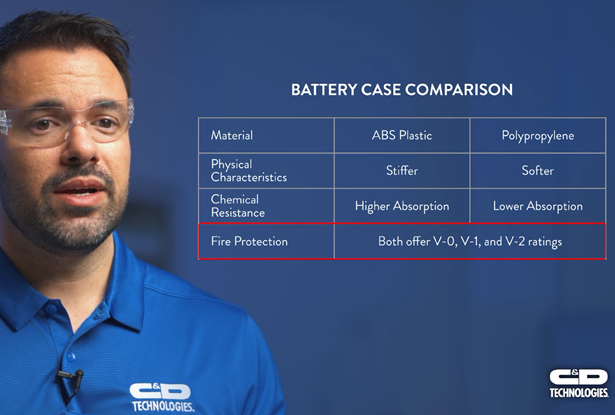
ABS plastic and polypropylene are the two most common materials used. Key factors to consider include:
Physical Characteristics. Both ABS and polypropylene perform well in this criterion. ABS is more rigid, so it holds its shape better over time and is generally more impact resistant. Polypropylene is a softer material, allowing it to handle temperature and pressure changes without cracking. Polypropylene may bow a little depending on the application, but that is intended.
Chemical Resistance. While both are solid in this regard, polypropylene has an advantage because it doesn’t absorb as much water and moisture as ABS. The result is polypropylene has greater chemical resistance, which means it is less likely to leak.
Fire Protection. Fire resistance is measured and defined by UL 9540. The UL classification is the most important aspect, regardless of the housing material. There are other classifications, such as HB or 5VA and 5VB. The most common in stationary batteries are V-0, V-1, and V-2, with V-0 being the gold standard.
Summary
As we’ve shown here, there are many considerations when selecting a battery. Whether it is different chemistries, certifications, or cases, a lot goes into a premium product that will pass the test of time. A partner with a proven history of developing high-performance batteries is more likely to provide a power solution that will perform as specified for a longer period.
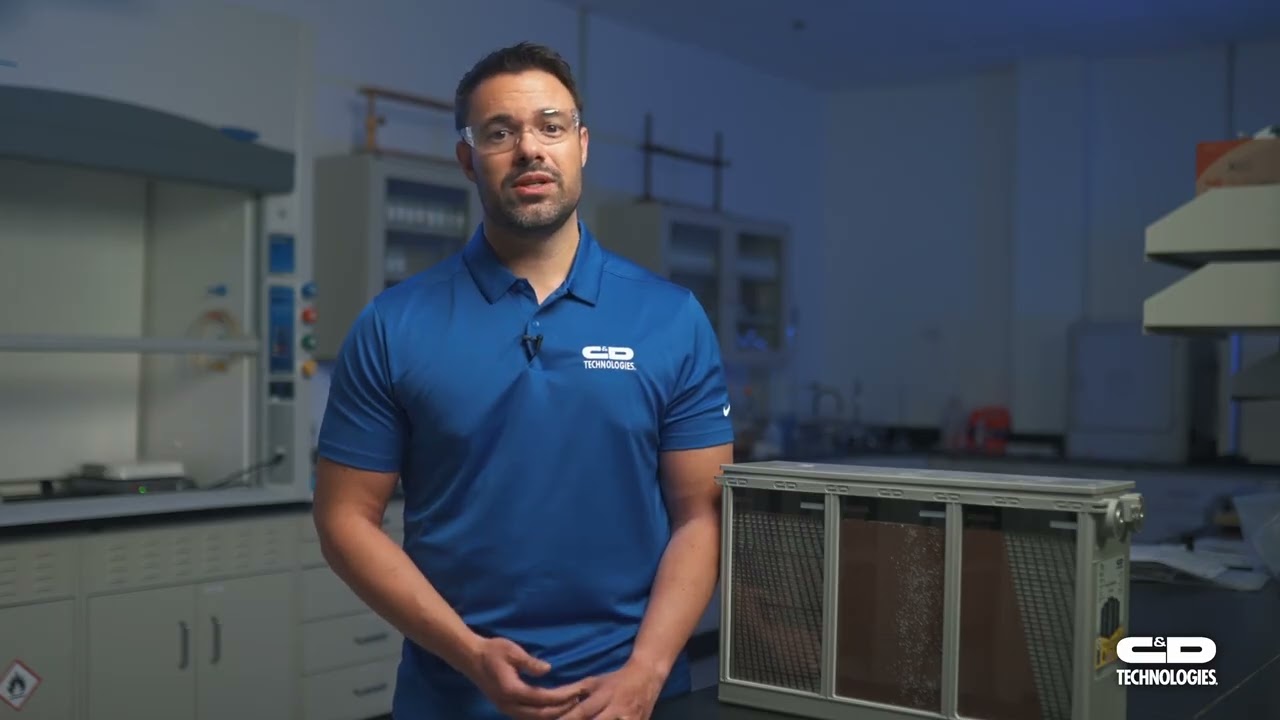
Learn more about lead acid battery myths in the 8-minute video, "TPPL Misconceptions," below.
Lead Acid Myths: 4 Common Myths
Lead acid batteries have been around a long time and misconceptions have grown around their capabilities, longevity, and other qualities. In this 8-minute video featuring C&D's Erick Soares, you'll hear expert insights on lead acid chemistry and get practical guidance on choosing the right battery for your project.