

Large Format VRLA Batteries for High-temperature Environments
By Robert Malley, Vice President, Portfolio Strategy, C&D Technologies
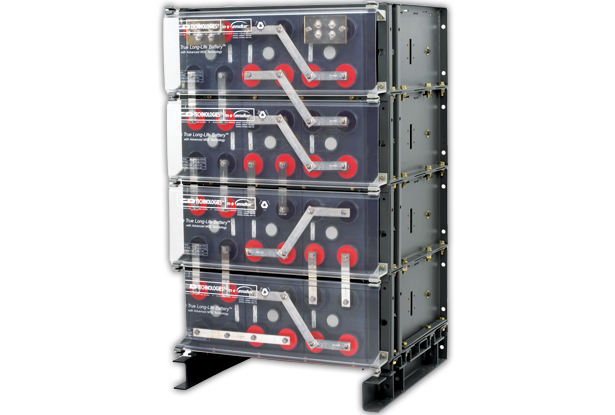
In today's telecommunications infrastructure, reliable standby power is non-negotiable, especially in harsh, high-temperature conditions where traditional VRLA batteries can degrade rapidly. Design advances that integrate MSE Pure Lead Plus technology, however, have created a cost-effective large format VRLA solution for high-temperature applications, such as outdoor wireless cabinets in hot climates, as well as in controlled settings like optical regeneration sites.
Integrating these VRLA batteries in telecommunications backup systems reduces or eliminates costly cooling equipment, lowers operating costs, and may create opportunities to increase revenue-generating equipment in conditioned environments.
Battery operation in high-temperature environments
Traditional VRLA products are susceptible to deterioration at high temperatures due to:
Recombination: In flooded lead acid and other electrochemical systems, some of the energy absorbed by the battery (as float current) goes to the electrolysis of water within the electrolyte in the battery. The resulting hydrogen and oxygen created are then vented out of the battery. VRLA products recombine these gasses in a reaction that generates heat, so all float energy is absorbed by the battery, and converted to heat, raising the internal temperature of the cell above the ambient temperature.
Insulating Space: In flooded lead acid and other "wet" systems, the cell interior is filled with liquid. This provides a thermal coupling between the interior of the cell wall and the battery group—enhancing heat transfer in and out of the battery. In VRLA batteries, there is typically a gas filled gap between the side of the battery cell and the interior cell wall. This prevents effective thermal transfer in this direction, potentially affecting at least half the battery surface area.
Positive Float Current Feedback: All electrochemical reactions are accelerated by higher temperatures, including those that drive float current acceptance. As noted above, VRLA batteries absorb all float current energy, and are typically better “insulated” against heat loss than flooded lead acid or other technologies. This means that cell internal temperatures are higher than other chemistries, driving even more float current. In its worst manifestation, this positive feedback loop causes thermal walkaway, which can destroy a cell in a short period. Thermal walkaway tends to be unpredictable, resulting in quick failure of products that otherwise appear to be normal.
Battery design for high temperatures
VRLA batteries are now available to eliminate these complications. These solutions have two critical design features that allow long life at room temperature and good performance at high temperature.
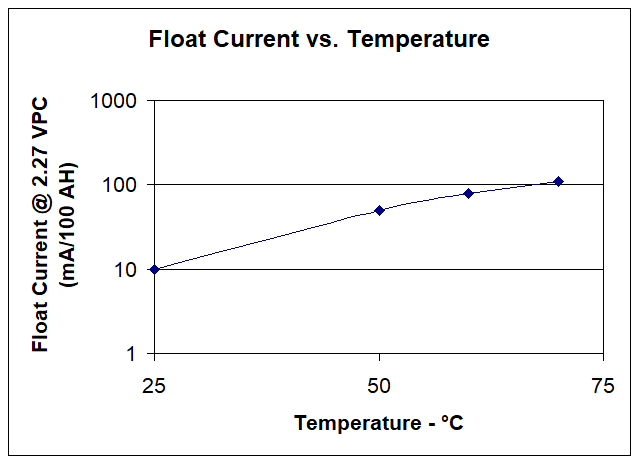
1. Float Current Control: Testing shows that float current control is the single largest factor in determining product life at accelerated test temperatures, and by inference at room temperatures. Controlling float current requires a mix of standard and proprietary technologies that keep the polarization (share of overvoltage) shared between the positive and negative plates. This is in contrast to other technologies that have very low voltages on the negative electrode, resulting in overcharge on the positive plates and high gassing and recombination rates. Float current control is also fundamental to prevent thermal walkaway, the self-destructive tendency of VRLA cells to increase float current with temperature, resulting in self heating and eventual product failure. Thermal walkaway can be induced by high ambient temperatures, overcharging of batteries due to electronics failures or shorting of single cells resulting in higher applied voltages to the other cells in the system. Figure 1 shows the behavior of the float current with temperature that thermal walkaway does not occur in float.
2. Lead Alloy Selection: In a lead-acid environment, the positive grid is exposed to conditions that promote conversion of lead to lead dioxide, resulting in grid growth and failure of the positive plates. Two corrosion modes occur:
Surface corrosion gradually reduces the cross section of the grid elements from the outside in.
Intergranular corrosion causes reactions along grain boundaries that attack the grid members through their cross section.
These modes can cause high rates of "grid growth." For long-lived and predictable products, intergranular corrosion must be delayed or prevented altogether, as it can cause accelerated aging and early cell failure.
Testing battery performance in high temperatures
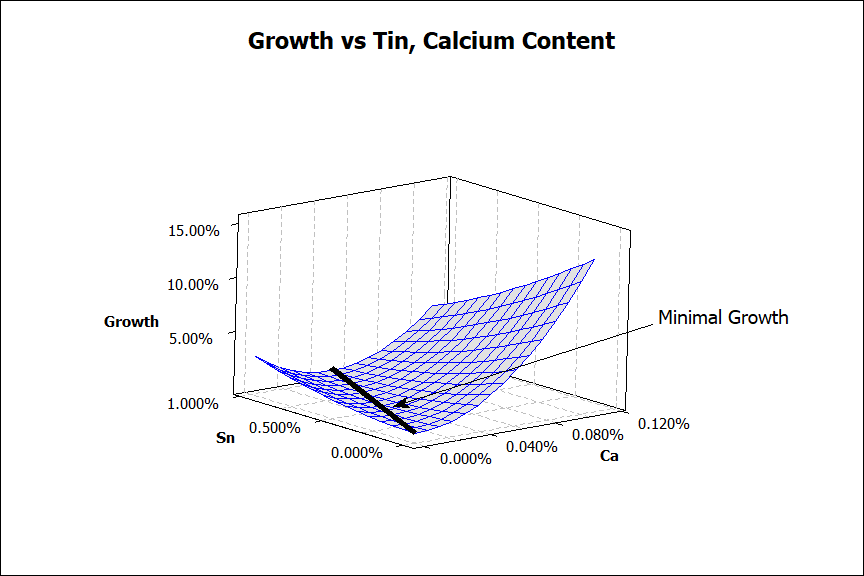
Lead alloys were tested as individual components by exposing test grids to accelerated corrosion conditions – 55°C sulfuric acid with 125 mV positive polarization for 180 days. Results (Figure 2) showed the accepted belief that large calcium contents promote high growth rates, a surprising relationship between growth and high tin contents—even for alloys without any calcium. There appears to be a region of minimal growth (and intergranular corrosion) that requires tin and calcium. This may be due to the formation of easily corrodible regions of lead tin eutectic on the outside of grain boundaries in pure lead tin alloys.
VRLA batteries are dynamic environments, so bench testing alone cannot simulate the impact of the swelling and contraction of active materials or other cell conditions. To determine the ultimate impact of the calcium level, reduction testing in actual products was required. In tests conducted, large format VRLA cells were chosen as a test bed. Both calcium and tin contents varied widely between the alloys, as shown in Table 1.
Table 1
| Element | Alloy 1 | Alloy 2 |
|---|---|---|
| Calcium | 0.08% | 0.45% |
| Tin | 2.20% | 0.90% |
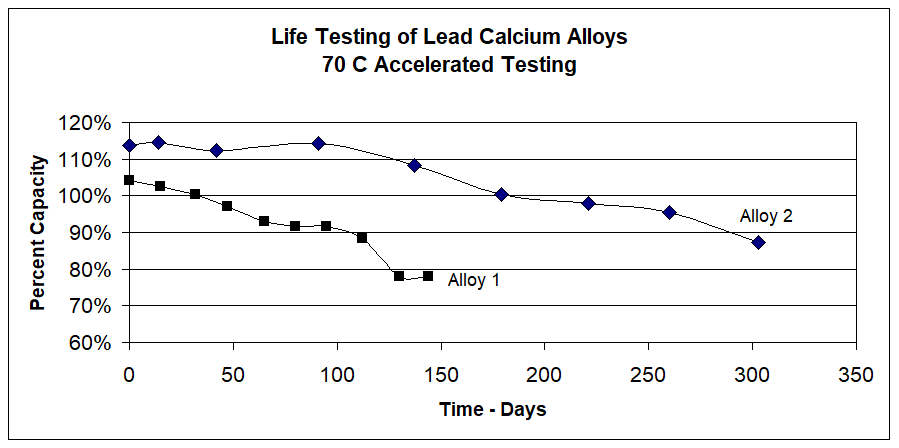
As with the bench testing, there were differences in cell performance using the two alloys. Testing was done according to SR-4228 [i], using 70°C test temperature. Results are shown on Figure 3. There was a clear difference in behavior between the two alloys. Reducing the calcium content by half resulted in twice the life at high temperature. (This was despite a doubling in the tin content, an element often attributed as providing corrosion resistance to VRLA alloys). Teardowns of these batteries showed little plate growth (less than 2% in any direction).
Test data shows that with proper attention to alloy content, lead calcium tin alloys can be formulated with the same functional corrosion resistance as pure lead. This has several implications for battery design, particularly for revisiting the relationship between battery life and plate thickness.
Product testing results
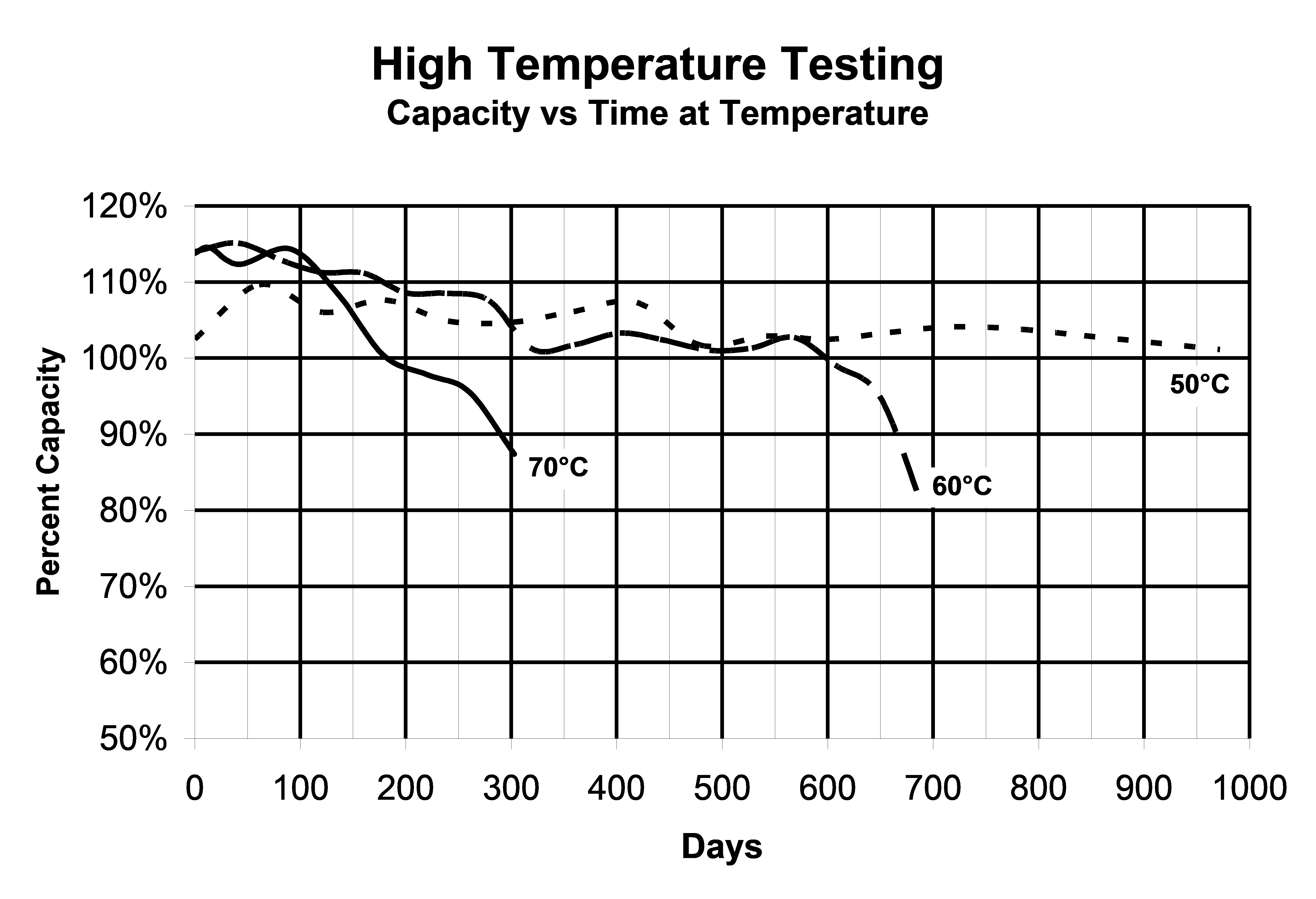
Single point life testing at 70°C was conducted using C&D Technologies’ msEndur, an AGM battery featuring C&D’s Pure Lead Plus technology, based on the Telcordia GR-4228 standard to convert time on test to expected life. (Note: C&D Technologies’ TEL-HT batteries will provide similar performance, because both are designed with Pure Lead Plus technology.) While it is possible to use the factors provided in GR-4228 or other standards to predict life at temperatures other than 25°C, good engineering practice requires that the temperature-life relationship be developed more fully, especially when predicting life at intermediate temperatures. The standard practice for this is to test at temperature intervals, such as 50°, 60°, and 70°C.
The testing protocol was as follows:
1. Baseline Characterization: Basic battery information (weight, OCV, ohmic values), float at 2.26 VPC for 72 hours, followed by a capacity test at the published C/8 rate.
2. Elevated Temperature: Batteries were placed in temperature chambers in standard modules. Temperatures were set at 50°, 60°, and 70°C, and controlled to ±2°C. Relative humidity was controlled to 20%, as per specification. Charging was done by constant voltage float at 2.26 VPC, the midrange of the recommended field voltage setting. (Voltage compensation was not permitted under the SR-4228 specification).
3. Capacity Testing: At regular intervals, the batteries were removed from the temperature chambers and allowed to cool for a minimum of 24 hours on float. Capacity testing was then performed using the baseline method. After, the batteries were float recharged and returned to the testing chamber. Testing ended when the battery capacity fell below 80%
The results (figure 4) showed that msEndur has a typical Arrhenius life relationship—life was roughly doubled by a temperature reduction from 70°C to 60°C. It also shows that testing at all temperatures is incomplete—testing at 50°C has exceeded 2.5 years of actual test time, without any signs of capacity loss or impending failure. Analysis of all tested cells showed that the degradation of the polycarbonate-ABS plastic caused the mechanism to fail. This allowed oxygen infiltration into the cell, resulting in depolarization of the negative plates and eventual capacity failure.
The msEndur battery was later redesigned to utilize a polypropylene case and cover which is more flexible and has a far lower vapor permeability than the previously used polycarbonate-ABS plastic. The resulting msEndurII battery retained the long life characteristics of the original msEndur, but eliminated the plastic case and cover as a life-limiting component.
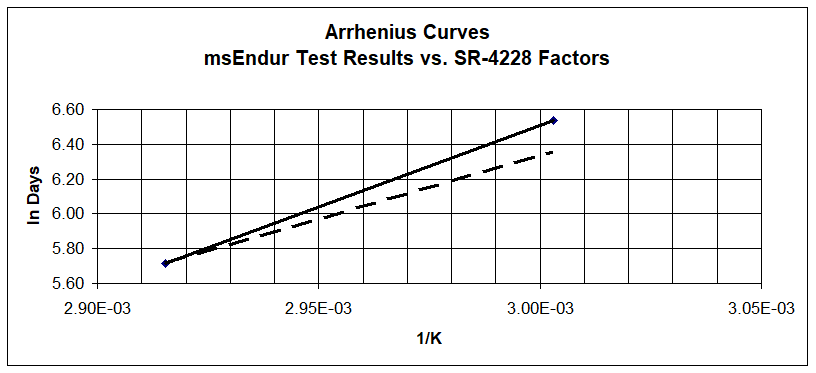
The Arrhenius relationships for the tests that have run to 80% capacity (70° and 60°C) are shown on Figure 5. Two lines were developed—one for the data from the accelerated testing, and one based on the SR-4228 acceleration factors. As shown, the VRLA battery with Pure Lead Plus technology has higher activation energy (steeper slope) than the SR factors. This has several implications for operation of this product at higher temperatures, most important of which is that it is capable of longer life at moderately high temperatures—such as those found in uncontrolled environments.
Potential applications for high-temperature batteries
As shown by the accelerated test results, msEndur (and similar Pure Lead Plus) batteries are capable of long life at high application temperatures. The Arrhenius relationship demonstrates that the product will be capable of meeting most customer life requirements at much higher ambient temperatures than other batteries or systems.
Table 2 shows the estimated product life using both the SR factors and the higher activation energy demonstrated in testing.
Table 2
| Temp °C | Temp °F | Life Estimate Testing (years) | Telcordia GR-4228 |
|---|---|---|---|
| 30 | 86 | 20+ | 13.8 |
| 35 | 95 | 18.6 | 9.3 |
| 40 | 104 | 11.4 | 6.4 |
| 45 | 113 | 7.1 | 4.4 |
| 50 | 122 | 4.5 | 3.1 |
The life estimates at moderately high temperatures allow more freedom to install the large format VRLA products in applications that were previously not cost effective. It also offers users several options for reducing operating costs, including:
Operation in Uncontrolled Environments: Studies have shown that the average temperature in typical telecommunication environments tops out at ~40°C in mid-summer, and for much of the year is less. At these average temperatures, the estimated product life of the battery tested is as long as competitive products operating in conditioned (25°C) environments, freeing space in conditioned central offices, and reducing replacement/maintenance costs.
Remote Sites: Conventional VRLA batteries that last 2-5 years in outdoor environments typically require frequent on-site maintenance to ensure continued reliable operation. Installing products with double the current available life, and no risk of sudden failure due to thermal walkaway greatly reduce the frequency of service visits to the sites, lowering site operating costs.
Energy Conservation: Most controlled sites are cooled simply to extend battery life. A battery capable of handling higher temperatures makes cost savings possible. As a bonus, the warmer temperatures increase battery capacity, offering either more power or extended run times.
In addition to these benefits, the long-life technology offers increases in power output and material efficiencies through new internal designs. The extreme corrosion resistance of the lead alloys and low float current technology reduce plate thickness without loss of real application life.
Conclusion
Development of long-life designs and elimination of unexpected failure modes has provided an opportunity for lead acid batteries, for both large format and monobloc Pure Lead Plus VRLA, to remain competitive with other technologies in high-temperature environments.
In controlled temperature applications, the benefits compound dramatically. Lower internal heating and slower aging mechanisms extend service life to achieve the design life. An additional benefit in controlled temperature applications is the ability to increase the ambient temperature, thereby reducing cooling requirements, saving on energy costs, and ultimately increasing site sustainability.
This exceptional performance is achieved through superior grid alloys and proprietary paste in MSE Pure Lead Plus technology. Optimized low-corroding alloys limit grid corrosion, while pure lead oxide and high-purity active materials create a balanced cell that operates like a flooded battery on float—reduced gassing, minimal water loss, and dramatically slower degradation.
[i] Bellcore SR-4228 VRLA Battery String Certification Levels Based on Requirements For Safety and Performance, Issue 1, 1997

About the author
Robert Malley has been involved in lead acid battery development and manufacturing since 1984, starting with Power Battery and then with C&D Technologies since 1999. Since joining C&D he has led teams in Process Engineering, Product Development, and Quality Assurance. He is currently Vice President Portfolio Strategy, responsible for Product Management for standby and motive lead-acid batteries.